Making things: interview series
Today, it has never been easier to create something, anything. But when given the opportunity, most people never do.
I feel this. I feel this so much, as a writer who hacks around on this blog; as a coder who has never made anything truly great; as a musician who has played gigs for money, but has never written a song. And I’ve heard friends and acquaintances tell me about it - amazing, interesting, talented, witty people - who don’t feel like they can create.
Besides those hard constraints - time, money, health, obligations - there are deeper insecurities at play. It’s not that I don’t have ideas; if anything, the blank page is overwhelming with possibilities. But there’s always a bit of doubt lurking - someone else has already done it, better than I could hope to do, so why start?
I interviewed four creators I admire, who make exciting, creative, uniquely-personal things - the kinds of things we need more of - hoping they could tell me how they stay motivated and decide what to work on next.
Amit Patel is the creator of Red Blob Games, where he makes interactive explanations like A* pathfinding and Hexagonal grids, using motivating examples from computer games.
Morry Kolman is an award-winning independent artist who questions the technological and cultural forces around us with works like Traffic Cam Photobooth, First Light Stars, and Mr. Beast Saying Increasingly Large Amounts of Money.
Nolen Royalty, also known as eieio.games, helps strangers interact on the internet through games and experiences like One Million Chessboards and Stranger Video.
Seth Larson is Security Developer-in-Residence at the Python Software Foundation, open source maintainer of urllib3, and blogger of delightful oddities like Hand-drawn QR codes and Post Malone Oreos.
I started each interview with these two questions:
When anything is possible, how do you decide what to create?
If someone else can create it, then why should you?
There wasn’t any 12-step formula to success, but certain patterns emerged. Each of these creators figured out how to return to their own interests, make enough things to discover their voice, and resist the distractions of analytics.
Start with your own interests, not someone else’s
You probably have personal interests [citation needed]. But how does that translate into actual creation? Seth Larson put it simply: “Listen to yourself and what you find wondrous.” Start with what you love to think about, what makes you curious, and what you find fun.
Morry Kolman often starts from the fun side, describing his own work as “extremely high-effort shitposting” or “Wouldn’t it be funny if…?” But he’s also interested in the invisible flow of data in our lives.
Traffic Cam Photobooth was inspired by an art class prompt: “Take a picture without taking it.” But wouldn’t it be funny if anyone could take a selfie using the traffic cameras already installed around New York City? Wouldn’t it be funnier if the Department of Transportation sent you a cease-and-desist letter, and you took a selfie of that too?

Image via Morry Kolman
Learning is a great motivation, too. Everyone I talked to mentioned learning - new tools, new tricks, a topic or technology you’re curious about. When something catches your interest, follow it.
Amit Patel creates interactive explainers on topics like A* pathfinding or curved paths; they’ve been invaluable resources for millions of people over the years. But his site started out as a curation of bookmarks about video game development. Even today when he considers new projects, he asks whether the purpose is to learn or to build.
For example, Voronoi Percolation was a learning project, to try a new technique for creating maps. Those learnings built the foundations for polished tutorials like Making maps with noise functions. Clearly defining research vs. development helps Amit focus his efforts on the part that matters; you do different things when practicing vs. performing.
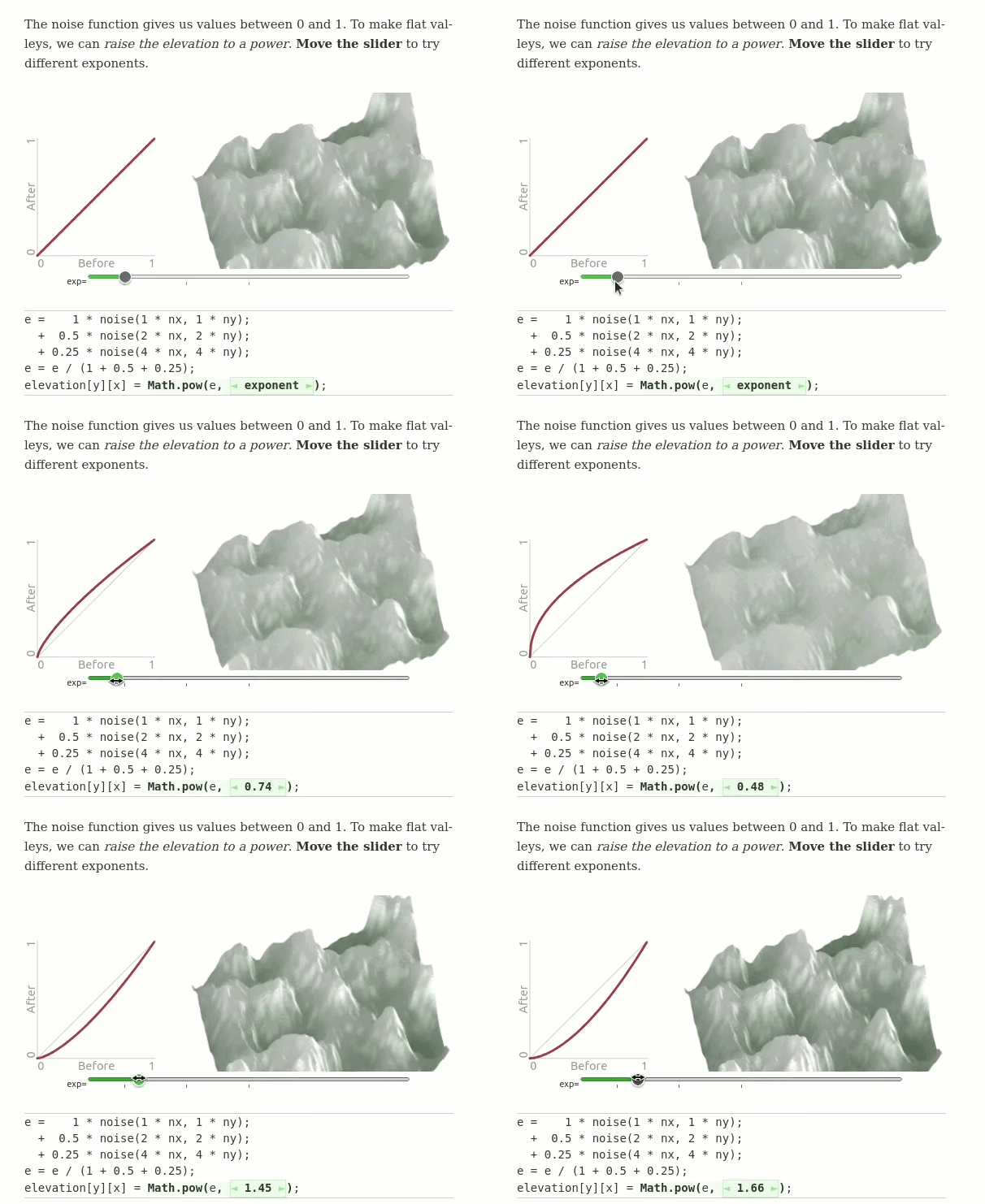
Amit Patel’s explainers make it easy to manipulate key variables and see their effects.
Meanwhile, Nolen Royalty creates online experiences, often massively-multiplayer - you might know him from One Million Chessboards or Stranger Video. He told me he wants to connect people, make them laugh, and/or teach them.
NR: I sort of grew up on the internet. My family moved around a lot, so a lot of my friends are friends that I originally met and hung out with on the internet (though we eventually met in real life). That was an important part of my life, and I want to promote the idea that the Internet is a silly place to do silly things with other people… About teaching people - my parents are both professors, so I think I’ve always loved explaining and being explained to.
From the full interview with Nolen Royalty
You might read this and be discouraged - maybe you don’t have such clear motivations or interests. That’s completely natural. Nolen himself said, “It took time for me to identify a style that I enjoy and can point to as my personal style”. So how do you do that?
Make enough things to find your thing (and get good at it)
Did you know that babies cry not because they love crying, but because they don’t have the ability to express themselves? I find that very relatable.
I think a lot about Ira Glass’s “taste gap”: when you first create anything, you’ll be disappointed by the results. You have good taste, and you’d like to make something good, but your own work doesn’t measure up.
Ira Glass - who has been running This American Life longer than I’ve been alive - tells us it’s perfectly normal to make something and immediately hate that it’s not quite where we want it to be. Just about every successful creator went through the same experience of repeated self-disappointment.
It would have been really cool for Nolen Royalty to burst out of nowhere with Marc Andreessen Egg Game. But that’s not how it played out in real life.
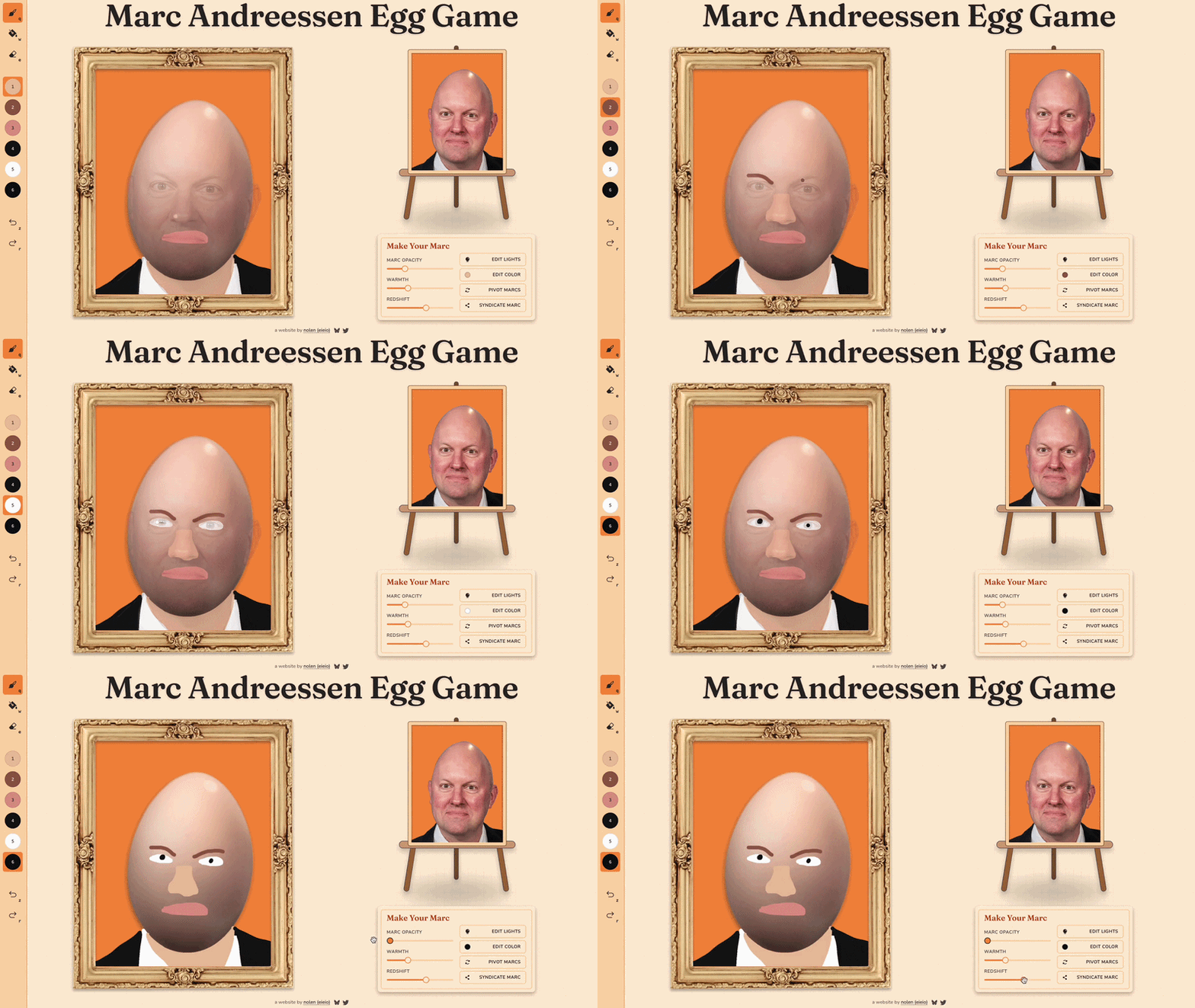
This is a game with style.
What really happened is that Nolen made a bunch of generic games first. He showed them to a bunch of people at the Recurse Center to learn what resonated with them, and what he liked himself. He kept going, and that’s why today we can all doodle on eggs to make them look like the famous venture capitalist/Netscape founder.
As Amit Patel reminds us, studying is not the same as doing: “You can read books and watch videos about riding a bike, but to actually learn you have to sit on the bike.” For that reason, I like creation challenges like game jams, NaNoWriMo, or Jamuary (my friends Justin and Jackie had really great Jamuarys this year). They give you the chance to fall off of the bike, get back on, and keep going. The Ira Glass quote finishes:
It’s only by actually going through a volume of work that you are actually going to catch up and close that gap, and create something as good as your ambitions. It takes a while. It’s gonna take you a while. That’s normal, and you just have to fight your way through that, okay?
The more you do, the more you’ll discover that despite the world being a large place, there are still many things that have not been done yet. Straight from the interviews:
SL: I have a unique perspective, but I don’t think that’s because I’m super special.
NR: No one has done it yet.
MK: There are billions of ideas, and a finite amount of people who can actually make them happen.
From the full interviews with Seth Larson, Nolen Royalty, and Morry Kolman
Don’t let the numbers choose for you
Seth Larson is lead maintainer for one of the most widely-used Python libraries, urllib3, and he works on open-source security at the Python Software Foundation. But his personal blog is a different animal entirely, with delightful oddities like Hand‑drawn QR codes, Post Malone Oreos, and “Food JPEGs” mixed in. It’s so different, and that’s why I love it.
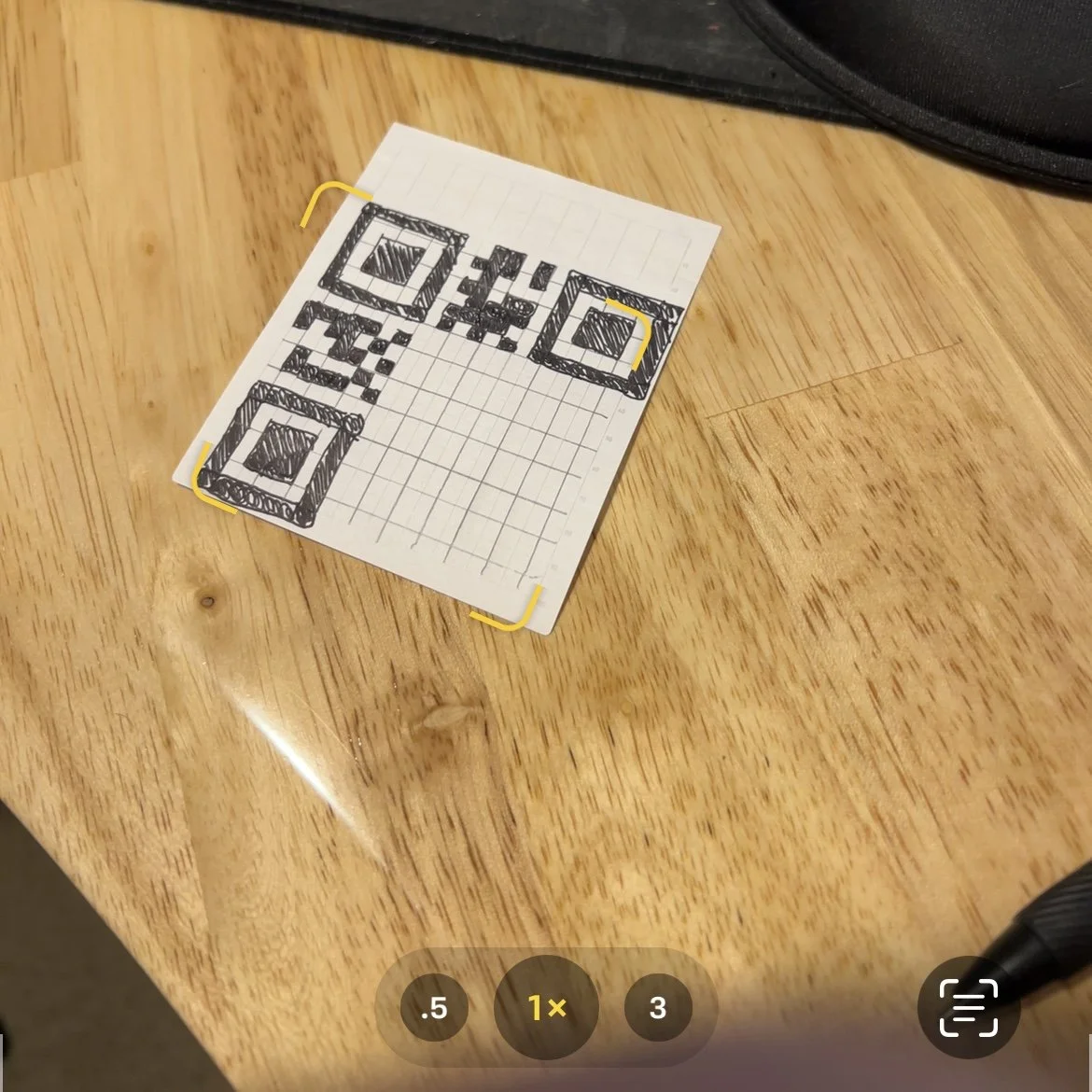
Seth Larson’s hand-drawn QR code (pen barely in frame).
SL: People are always thinking about social media algorithms and expectations. Everyone wants to be a brand, because overwhelmingly that is what we see. Most people can’t imagine a world without analytics, where we’re not tracking all of these numbers.
NR: Honestly, this is why I took a break from the internet for a while - I was tired of thinking about how to make people look at my stuff. I heard about the idea of “designing for the square” from a friend at MSCHF: every concept needs to make sense as a tiny square on an Instagram feed. That’s extremely constraining, and they need to consider this from the start so that they can make enough money to continue operating.
From the full interviews with Seth Larson and Nolen Royalty
I enjoy cooking, but I would be bad at running a restaurant or influencer cooking show. The thought still crosses my mind at times, prompted by Instagram, TikTok, and other social media. Those platforms are dominated by “content”, not people; that content is attention-grabbing, A/B-tested to death, and often teases financial success just a few posts away.
Creation doesn’t have to be your personal money-making machine. As Robin Sloan puts it, we can make “home-cooked apps”, just as we make home-cooked meals. And I find myself sharing Molly Conway’s “The Modern Trap of Turning Hobbies Into Hustles” quite often: “You don’t have to monetize your joy.”
Focusing on the numbers, whether views or dollars, will pull you towards the wants of other people or platforms, not your own.
AP: I would often try to optimize for some specific metric like "views" or "likes" or "wishlists" or "revenue", instead of spending my effort on something that doesn't have a metric, like how enjoyable or useful my page is. I thought about all the best things in my life, and… they don't have metrics. I’m trying to spend more of my energy on things that aren’t measured and optimized.
From the full interview with Amit Patel
You should read the full interviews
I haven’t done these interviews justice. There is too much good stuff for me to flatten down here. In the individual interviews, you can hear how Morry doesn’t want you to draw a portrait of your mom; how Amit got real about his own motivations and desires; how Seth handles the conflict between fun side projects and important open-source volunteer work; and why Nolen says “Don’t do what I did!”. Please go read them.
I started this project with the faint hope that I would unblock myself or break through some creative barrier. I didn’t - actually, I spent months on false starts to write the post you’re reading now. But although I still haven’t written a song or produced a great work, I feel a little bit closer now. I hope this helps.
—
Read the full interviews on making things: